
Battery storage
Store cheap off-peak power and skip peak-rate charges.
All-black tier-1 panels sized to your roof and usage, with monitoring from day one.
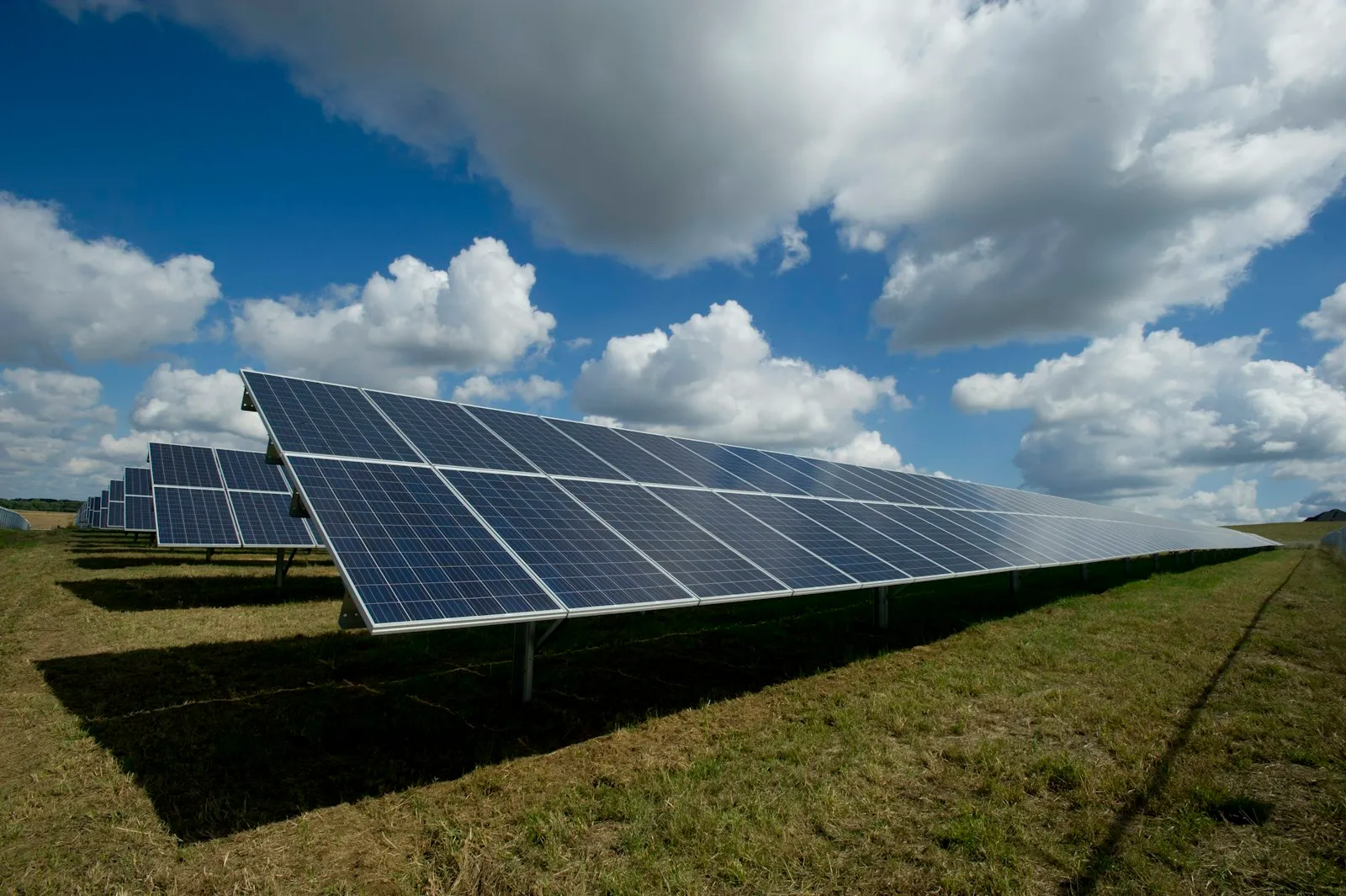
Indicative only. Your survey gives fixed figures for your property.
We start from your bills, not your roof. A year of usage, or your smart meter data, tells us how much electricity you use and at what times of day. Then we measure the roof: which way it faces, its pitch, shading from chimneys, trees and neighbouring buildings, and how many panels physically fit with the edge clearances the mounting system needs.
Most homes we survey suit a system in the 4.0 to 6.4 kWp range, but bigger is not automatically better. If the house is empty during the day and you have no battery or electric car, much of the extra output is exported at a lower rate than you pay to buy electricity back. Your yield report shows expected generation month by month, how much you are likely to use yourself and how much you will export, so you can see exactly where the saving comes from.
Yes. Panels generate from daylight, not heat, and they actually run more efficiently in cool weather. Output falls under heavy cloud and in the short days of December and January, which is why UK yield figures are modelled on local weather records rather than on hours of sunshine.
South-facing roofs produce the most, but east-west roofs work well too. They spread generation across the morning and evening, when most households use more power. North-facing roofs rarely make financial sense, and if that is all you have, we will say so at survey rather than sell you a system that won't pay back.
In England, roof-mounted solar on most houses and blocks of flats counts as permitted development, so you don't need planning permission, as long as the panels stay within set limits on how far they stand off the roof. Listed buildings need consent, and conservation areas and flat roofs have extra rules. Scotland and Wales have their own rules. We check all of this before we design anything.
Every system also has to be registered with your local electricity network operator (the DNO). Smaller systems are notified after installation. Larger ones, or a system paired with a battery that raises the total inverter capacity, need the network operator's approval before we fit them. We handle both applications and plan your install date around them.
Scaffolding usually goes up the day before. The panels go on the roof first; the inverter, generation meter and isolators are fitted inside, usually in the loft or next to your consumer unit. Most homes are finished in one to two days, and your power is off only briefly while we connect to the consumer unit.
Before we leave, we commission and test the system, set up app monitoring on your phone and show you what the readings mean. You get one handover pack with your certificates, warranties, the network operator notification and your monitoring login.
Electricity you generate but don't use goes back to the grid. Under the Smart Export Guarantee, larger energy suppliers must offer you a payment for it, and you can choose any participating supplier, not only the one that supplies your home. Export rates vary a lot between suppliers and tariffs, so it is worth comparing before you sign up. We give you the documents suppliers ask for at handover.
If you think you might add a battery, an EV charger or a heat pump in the next few years, tell us at survey. A hybrid inverter fitted now can make a battery cheaper and simpler to add later, and we can route cables and position isolators so the second job causes less disruption. It is one of the reasons we prefer one survey covering the whole house to a quote for panels alone.
AT Group is based in Leicester and installs across the UK through regional teams. Survey slots are usually within two weeks. Book a free survey.
Most domestic systems we quote fall between £5,500 and £9,000, depending on the number of panels, the roof type, access and whether a battery is included. Your survey turns that into a fixed price with no provisional sums.
Panels usually carry a 10 to 25-year product warranty and a 25 to 30-year performance warranty, and they keep generating well beyond that with a slow decline in output. The inverter is the part most likely to need replacing during the panels' life, typically after 10 to 15 years.
Usually not. In England, roof-mounted solar on most houses and blocks of flats is permitted development. Listed buildings need consent, and conservation areas and flat roofs have extra rules. We check this before designing your system.
Yes. An east-west system produces a little less in total than a south-facing one, but it generates across the morning and evening, which often matches how a household actually uses power.
On a pitched roof, rain does most of the cleaning. Keep an eye on your monitoring app: if output drops compared with the same month last year, something needs checking. We offer servicing and repairs on any system, including ones we didn't install.
No, when it is done properly. We check the roof structure at survey, and the mounting hooks sit under the tiles and fix to the rafters, so the roof stays watertight. If the roof needs repair first, we tell you before you commit.
Store cheap off-peak power and skip peak-rate charges.
Replace gas or oil heating with a high-efficiency system.
Smart charging from your solar or your cheapest tariff window.
Loft, cavity and external wall work that cuts demand first.
Modern condensing boilers and full system replacements.
We check eligibility and handle the paperwork for you.
Servicing, fault-finding and repairs on any existing system.