
Solar panels
Tier-1 all-black PV designed for overcast UK conditions.
Heat extracted from outside air, sized against a full heat-loss calculation rather than a rule of thumb.
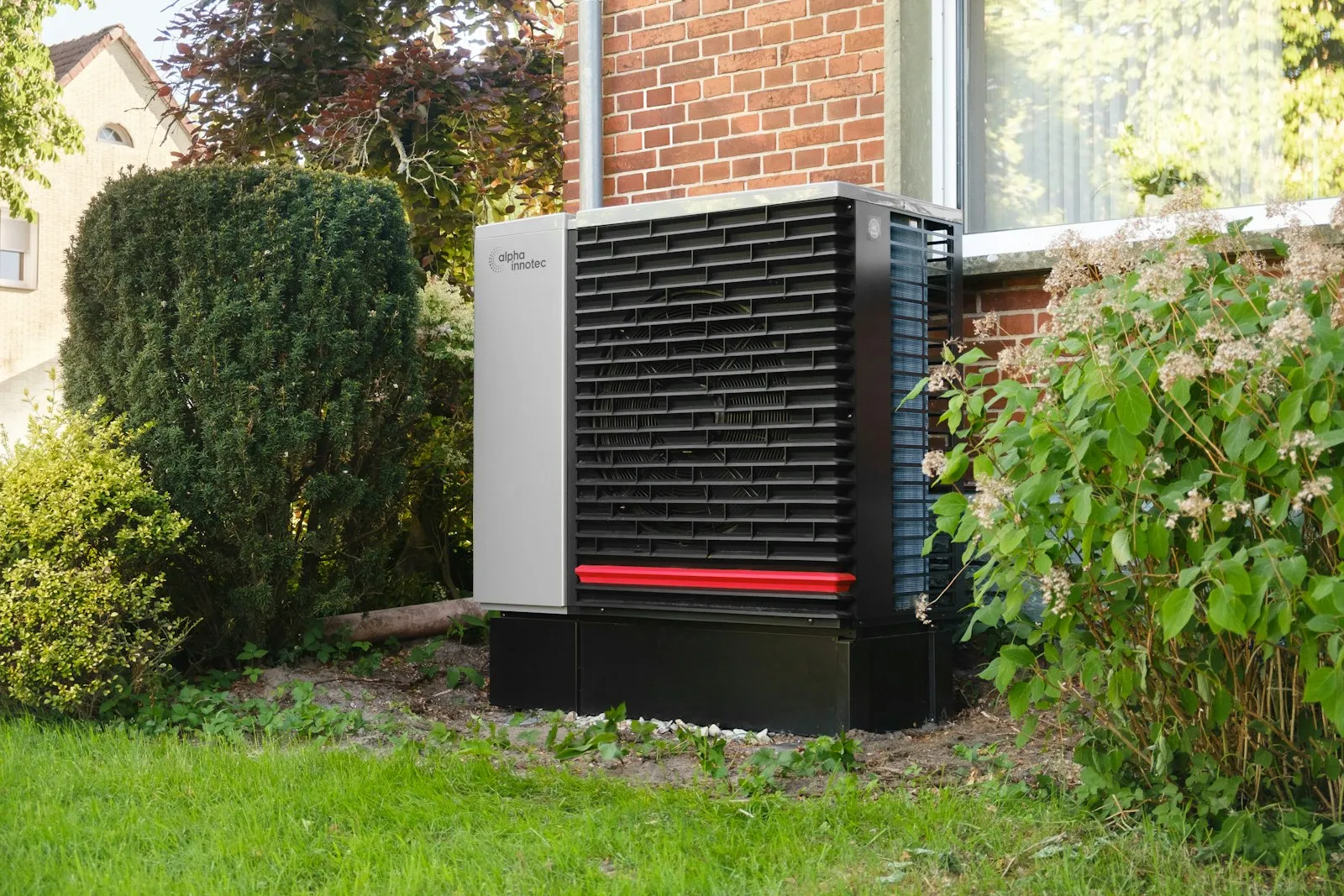
Indicative only. Your survey gives fixed figures for your property.
An air source heat pump takes heat from the outside air and moves it into your radiators and hot water cylinder, working like a fridge in reverse. It runs on electricity, but a well-designed system typically delivers around three units of heat or more for every unit of electricity it uses over a year.
It keeps working in sub-zero temperatures. It is less efficient on the coldest days, and that is exactly why the system has to be sized properly for your home rather than guessed.
Heat pumps run most efficiently at lower water temperatures than a gas boiler. So every radiator needs to be big enough to heat its room at that lower temperature. We measure each room, including walls, windows, floors and ceilings, and calculate how much heat it loses on a cold day.
That tells us two things: the right size of heat pump, and which radiators need upsizing. A heat pump that is too big switches on and off constantly and wastes energy. One that is too small can't keep up in winter. Measuring takes longer than a rule-of-thumb quote, and it is the difference between a system that is cheap to run and one that isn't.
Most homes can take a heat pump, including older ones. What matters is how much heat the house loses, whether there is space for the outdoor unit and a hot water cylinder, and whether the radiators and pipework can carry enough warm water around the house.
If the loft or cavity walls aren't insulated, we will usually recommend doing that first. It often reduces the size, and the cost, of the heat pump you need. If a heat pump isn't the right choice for your home yet, we will say so and talk you through the alternatives, including a boiler upgrade.
What a heat pump costs to run depends on how well it was designed and set up, your electricity tariff, and how warm you keep the house. Heat pumps work best running steadily at a low temperature with weather compensation, which adjusts the water temperature to the weather outside, rather than switching on and off like a boiler.
Several energy suppliers offer tariffs designed for heat pumps, and pairing a heat pump with solar panels and a battery can bring costs down further. We set the controls up at commissioning and walk you through them, so the system runs the way it was designed to.
Government grants can cover a significant part of the cost of replacing a gas, oil or LPG boiler with a heat pump. The rules and amounts change, so we check what applies to your home at survey and handle the application for you. See our government grants page for how that works.
Most installations take two to four days, and your heating is usually off for only part of that time. We position the outdoor unit for airflow, efficiency and noise, away from bedroom windows and neighbours where possible. Modern units are quiet, and the sound is closer to a fan than an engine.
Most air source heat pumps on houses are permitted development, subject to conditions on size, siting and noise. We check the current rules for your property, and any listed building or conservation area restrictions, before the design is finalised.
AT Group is based in Leicester and installs across the UK through regional teams. Survey slots are usually within two weeks. Book a free survey.
Before any grant, most systems we install cost between £7,000 and £13,000, depending on the size of the heat pump, the cylinder and how many radiators need changing. Your survey gives a fixed price and shows what any grant covers.
Often some of them, rarely all. The room-by-room heat loss survey shows which radiators are big enough already and which need replacing to heat the room at a heat pump's lower water temperature.
Yes. Heat pumps are widely used in countries with much colder winters than the UK. They are slightly less efficient on very cold days, which the design allows for.
Yes, in most homes. If you have a combi boiler now, we find space for a cylinder, often where an old one used to be or in a cupboard or loft space.
A well-maintained air source heat pump typically lasts 20 years or more. An annual service keeps it efficient and is usually required to keep the manufacturer warranty valid.
Modern units are quiet. You will hear a low fan sound close to the unit, and we site it away from windows and boundaries where possible to keep it unobtrusive.
Tier-1 all-black PV designed for overcast UK conditions.
Store cheap off-peak power and skip peak-rate charges.
Smart charging from your solar or your cheapest tariff window.
Loft, cavity and external wall work that cuts demand first.
Modern condensing boilers and full system replacements.
We check eligibility and handle the paperwork for you.
Servicing, fault-finding and repairs on any existing system.