
Solar panels
Tier-1 all-black PV designed for overcast UK conditions.
The cheapest kilowatt is the one you never use. We start here on most retrofit projects.
Indicative only. Your survey gives fixed figures for your property.
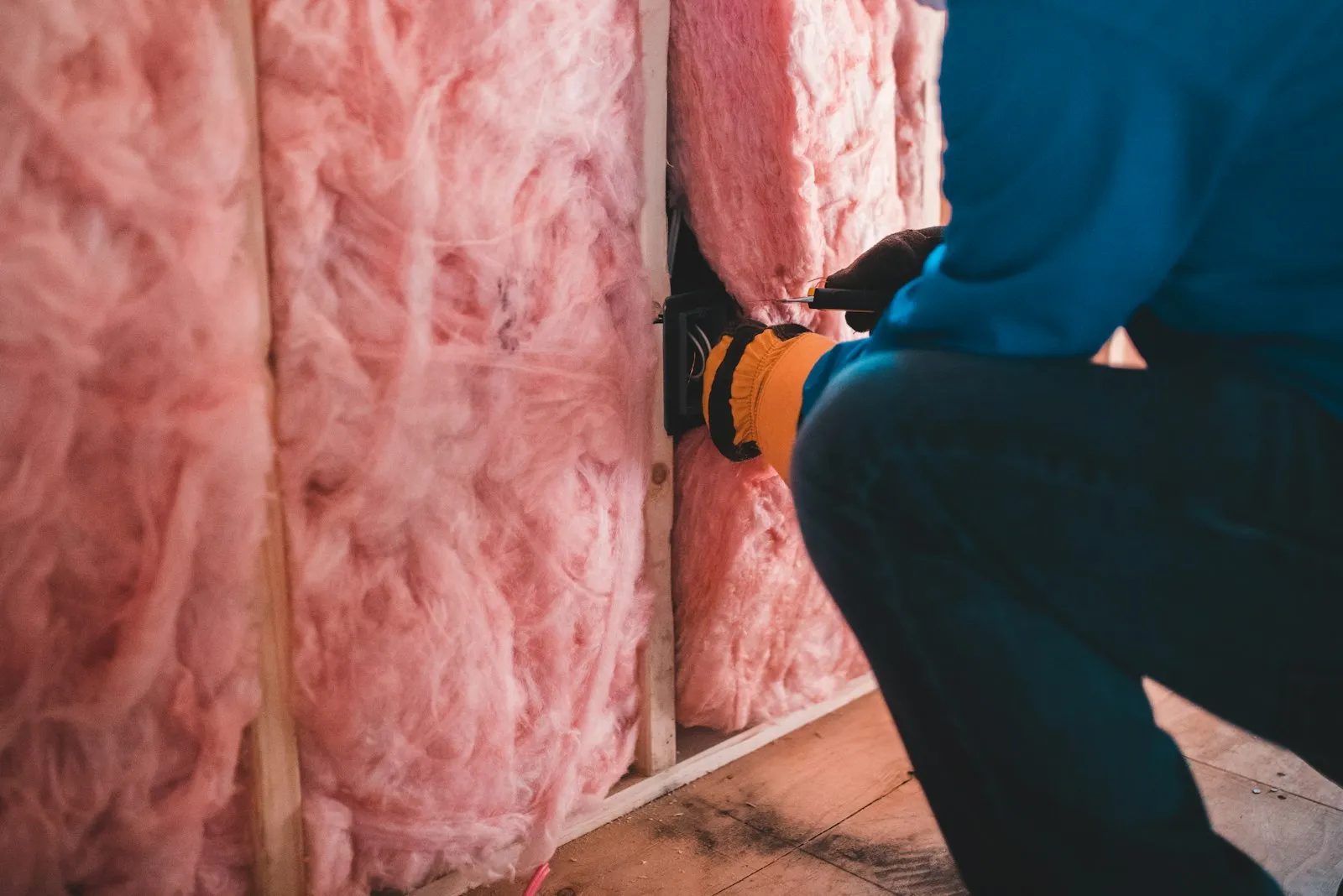
Insulation is the one energy upgrade with no moving parts and no running costs. It lowers your heating demand permanently, and it means any heat pump, boiler or solar system you add later can be smaller and cheaper.
That is why we usually start a retrofit with the fabric of the building. Fitting a heat pump to a house that is losing heat through an empty loft means paying for a bigger system to heat the sky.
The recommended depth for mineral wool loft insulation is 270mm, and many lofts still have 100mm or less from older installations. Topping it up is usually quick and is one of the cheapest upgrades you can make.
We keep ventilation gaps at the eaves clear so the roof timbers stay dry, insulate and draught-proof the loft hatch, and, if you store things in the loft, raise the boarding so the insulation isn't squashed flat, which would stop it working.
Most houses built from the 1920s onwards have cavity walls: two layers of brick with a gap between them. Filling that gap cuts heat loss through the walls, and the work is done from outside in a day or so.
Not every cavity is suitable. Walls exposed to driving rain, cavities blocked with building debris, and walls with existing damp can all cause problems if they are filled. That is why we inspect the cavity and the condition of the walls first. If your walls aren't suitable, we will tell you and won't fill them.
Older homes, roughly those built before the 1920s, usually have solid walls, which lose more heat than cavity walls. There are two ways to insulate them.
External wall insulation fixes insulation boards to the outside of the house and finishes them with render. It changes the look of the property and may need planning permission. Internal wall insulation fixes boards to the inside of external walls, which keeps the outside unchanged but takes a little space from each room. Both are bigger projects, and we scope and price them separately.
Insulating and draught-proofing a home makes it more airtight, so ventilation has to keep up. Without it, moisture from cooking, washing and breathing turns into condensation and mould.
Every insulation job we do includes a ventilation assessment. Where it is needed, we recommend extractor fans, trickle vents or other measures, so the house ends up warmer and drier, not just warmer.
AT Group is based in Leicester and installs across the UK through regional teams. Survey slots are usually within two weeks. Book a free survey.
Most jobs we quote fall between £800 and £6,000. A loft top-up sits at the lower end; loft and cavity together sit in the middle. Solid wall insulation is a larger project and is priced separately after survey.
It depends on what you have now. An uninsulated loft or empty cavity saves far more than a top-up. You get a before-and-after performance note so you can see what changed.
Most houses built from the 1920s onwards have cavity walls, but not every cavity should be filled. We inspect the cavity, check for damp and consider how exposed the walls are before recommending it.
Badly installed insulation can, especially in unsuitable cavities or without enough ventilation. That is why we survey first and include a ventilation assessment with every job.
A loft is usually done in a day or less, and cavity walls in one to two days. Solid wall insulation takes longer, and we give you a timeline with the quote.
Some households qualify for funded or part-funded insulation through government-backed schemes. We check what applies to you at survey, free of charge.
Tier-1 all-black PV designed for overcast UK conditions.
Store cheap off-peak power and skip peak-rate charges.
Replace gas or oil heating with a high-efficiency system.
Smart charging from your solar or your cheapest tariff window.
Modern condensing boilers and full system replacements.
We check eligibility and handle the paperwork for you.
Servicing, fault-finding and repairs on any existing system.